
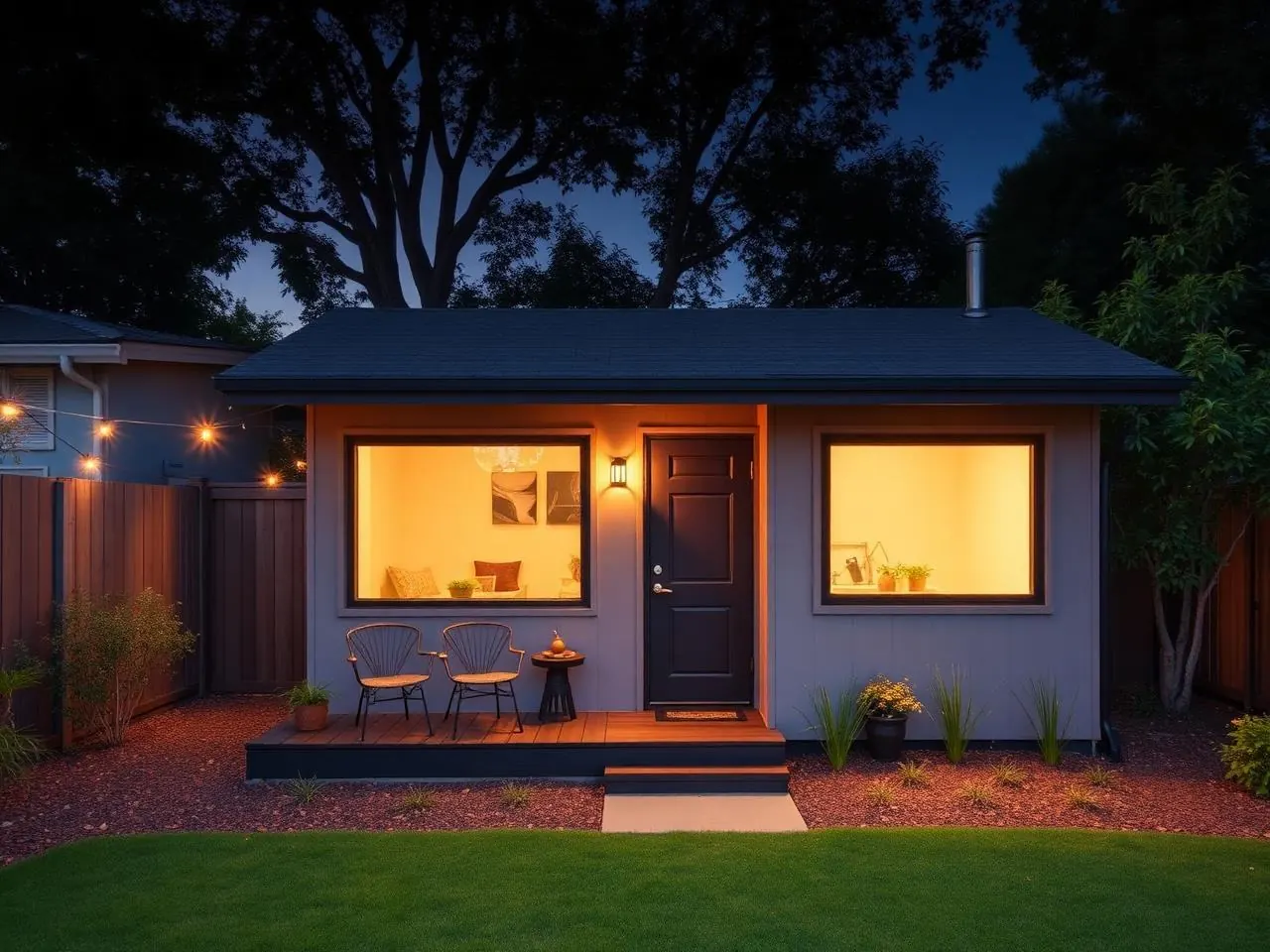
You will hear ADUs called granny flats, in-law units, casitas, backyard cottages, and garage apartments. Those are nicknames for the same legal idea: a complete, permitted second home on a single-family or multifamily lot, accessory to the primary residence.
The definition that actually matters
Whether a space counts as an ADU comes down to independence, not size or style. A permitted ADU has its own entrance, its own cooking facilities, its own bathroom, and its own sleeping area, and it is approved as a dwelling by the agency that reviews your permits.
This is why a beautifully finished bonus room is not an ADU, and why an unpermitted converted garage with a hot plate is not one either. The paperwork is part of the definition. That distinction also decides how the space is treated later — by appraisers, by lenders, and by buyers.
The five types you will encounter
Detached ADU
A standalone building in the yard, with its own foundation, roof, and utility runs. The most design freedom and typically the highest budget. See detached ADUs.
Attached ADU
New square footage that shares at least one wall with the main house. One wall and part of the roof already exist, which usually helps the budget, but the connection to the existing structure has to be detailed carefully. See attached ADUs.
Garage conversion
An existing garage turned into a dwelling. Often the least expensive path, because the shell exists — the work concentrates on habitability: insulation, windows, egress, plumbing, electrical, HVAC, and finishes. See garage conversions.
Interior conversion
A basement, a bonus room, or a wing of the house carved out as an independent unit with its own entrance. Least visible change to the property from the street.
Junior ADU (JADU)
A smaller unit created inside the existing walls of a single-family home, capped by state law at 500 square feet, allowed to share a bathroom with the main house, and built around an efficiency kitchen. See junior ADUs.
How homeowners actually use them
- Family housing — aging parents nearby with privacy on both sides, or an adult child who needs a stable base.
- Long-term rental income — see our ADU rental income guide.
- Working space — a separated office or studio that is still a legal dwelling, which keeps future options open.
- Flexibility over time — the same unit serves different purposes across a decade of family changes.
- Property value — permitted, livable square footage. What that is worth is covered in how much value an ADU adds.
The rules, in outline
California sets a statewide floor that local ordinances cannot go below, and cities and counties fill in the rest. The recurring subjects are size, height, setbacks, parking, utilities, and fire access. Two of those get their own guides: size and height limits and setback requirements.
The part that surprises people is how much of the answer is parcel-specific. Two neighbors on the same street can get different answers because of an easement, a slope, a protected tree, or a sewer lateral. That is what a feasibility review exists to settle.
This is general planning information from HomeAdd, not legal advice or an approval determination. State law, local ordinances, and site conditions vary and change. Verify current requirements with your local building and planning department, and with the California HCD ADU Handbook.
Where to go next
If you are still deciding between options, the comparisons are the fastest way through: attached vs. detached, ADU vs. room addition, and what an ADU costs to build.
Not sure which type fits your lot?
Free property check — we review setbacks, utilities, and zoning and tell you honestly what's buildable before any design work begins.
What does ADU stand for?+
ADU stands for accessory dwelling unit. It is a second, smaller, self-contained home on a lot that already has a primary residence. Because it is legally accessory to the main house, it is permitted as a residential use rather than as a separate subdivided property.
What makes something an ADU rather than a guest room or shed?+
Independence. An ADU has its own entrance, its own kitchen or cooking facilities, its own bathroom, and its own sleeping area, and it is permitted as a dwelling. A converted garage used as a gym, a shed with power, or a bedroom off the hallway is not an ADU no matter how it is furnished.
What is the difference between an ADU and a JADU?+
A junior accessory dwelling unit is created within the walls of an existing single-family home and is limited by state law to 500 square feet. It may share a bathroom with the main house and has an efficiency kitchen rather than a full one. A standard ADU can be larger, can be detached, and must be fully self-contained.
Can an ADU be rented out?+
Generally yes for long-term rental. State law protects long-term ADU rental, while short-term rental of an ADU is commonly restricted or prohibited by local ordinance. Rules differ city by city, so the short-term question has to be answered against your own jurisdiction before you plan around that income.
Can an ADU be sold separately from the main house?+
Normally no. An ADU is accessory to the primary residence and shares the lot, so the two are usually conveyed together. There are narrow statutory pathways involving qualified nonprofits, and some jurisdictions have adopted separate-conveyance programs, but this is the exception rather than the default.
Does an ADU need its own utility meters?+
Not always. Some ADUs are separately metered for electricity, water, or gas, and others share the main house's services. Which approach makes sense depends on existing capacity, distance, jurisdiction, and whether you want the tenant billed directly. It is a feasibility question, decided before the design is locked.