
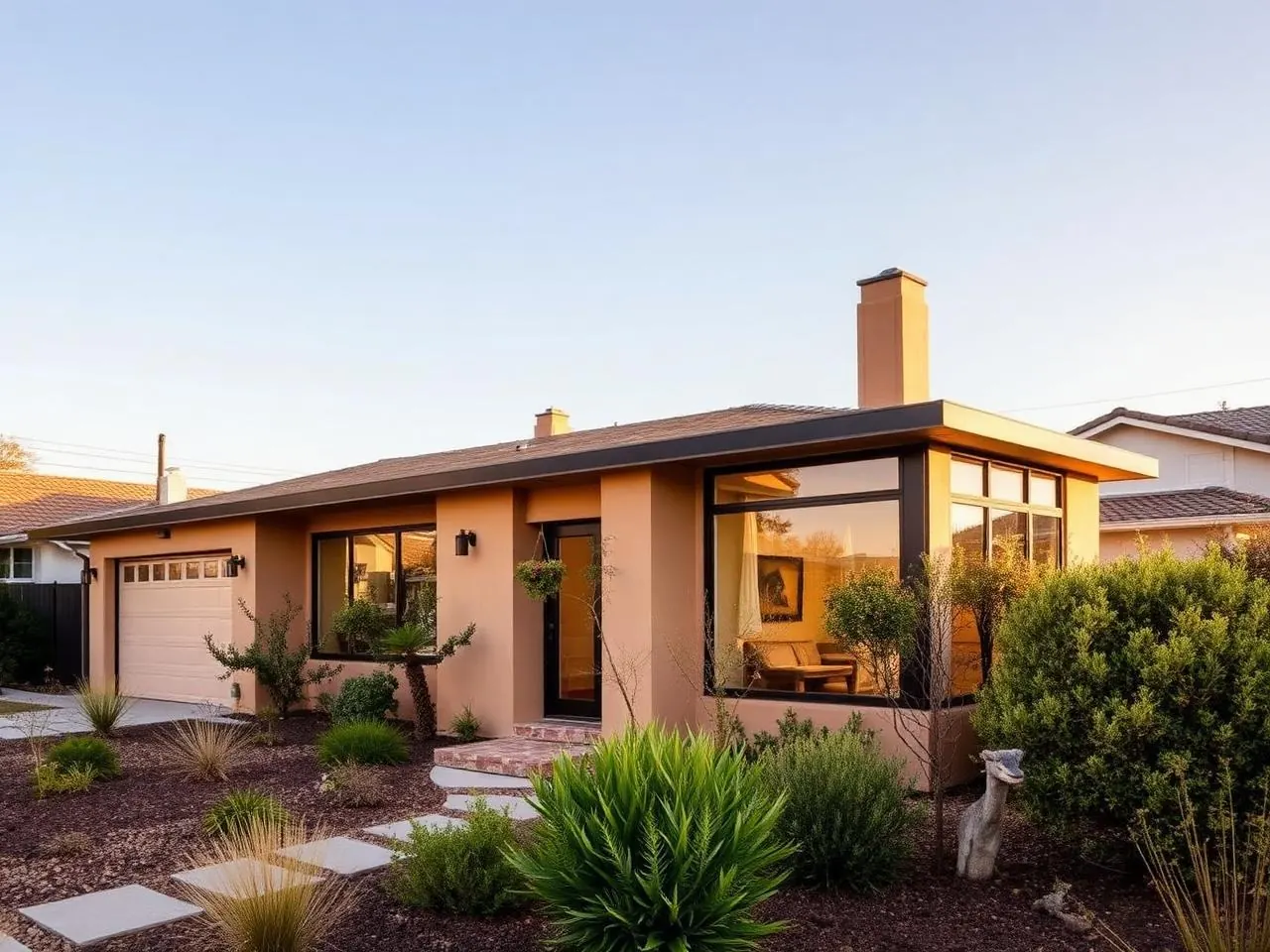
Search this question and you will find confident percentages. Treat them carefully. An ADU's contribution to value is a local, property-specific question, and the people qualified to answer it for your address are an appraiser and a local real estate professional. What we can do is explain the mechanics — what makes an ADU count for more, and what makes it count for less.
This is general planning information from HomeAdd, not an appraisal, a valuation, or tax or investment advice. HomeAdd does not guarantee any change in property value, resale outcome, or return on investment. Consult a licensed appraiser, a local real estate professional, and a tax professional for your property.
The two ways an ADU shows up in value
1. Permitted livable square footage
An appraiser works with permitted, habitable area. A legal ADU adds a complete dwelling to the property, and that is reflected through comparable sales of properties with similar accessory units. Where such comparables are plentiful, the contribution tends to be clearer; where they are scarce, appraisals can be more conservative than owners hope.
2. Income potential
Where local rules permit long-term rental, the unit can produce income, and that potential is part of what a buyer is purchasing. How directly it translates into appraised value depends on the appraisal approach used and on your market. Our ADU rental income guide covers how to research realistic rent instead of assuming a figure.
Permits are the whole game
This is the point worth repeating. Unpermitted space may be excluded from appraised square footage, can complicate a buyer's financing, and may have to be legalized or undone at the worst possible moment — during escrow. A permitted unit, inspected and closed out properly, is an asset with documentation behind it. An unpermitted one is a liability with a nice kitchen.
If you are weighing the process, see the Los Angeles ADU permit timeline and home addition permits.
What increases the value an ADU adds
- Genuine independence — its own entrance, its own kitchen and bath, and privacy from the main house in both directions.
- Real daylight and outlook — a unit whose only window faces a fence reads as a converted room, not a home.
- Separate outdoor access — even a small private patio changes how the unit is perceived.
- Sensible layout — see ADU floor plans and layouts.
- Durable, consistent finishes — quality that matches or complements the main house rather than reading as an economy build.
- Clean closeout — final inspection signed off, documentation retained, and the unit legally a dwelling.
What reduces it
- Unpermitted or partially permitted work.
- Consuming nearly the entire usable yard, in a market where yard matters.
- Eliminating parking in a neighborhood where street parking is genuinely difficult.
- Access that runs past the main house's private windows or through its living space.
- Awkward proportions — very low ceilings, no storage, or a bathroom entered from the living room.
Cost and value are different questions
What a project costs and what it contributes to value are related but separate. Build cost is driven by type, parcel, utilities, and finishes — see what an ADU costs to build. Value contribution is driven by your local market. It is entirely possible for a project to be worth doing for family or income reasons even where the appraised contribution does not match the spend, and it is equally possible for the opposite to be true. Deciding requires both numbers, honestly obtained.
If you are still choosing a direction, ADU vs. room addition and ADU vs. second-story addition compare the trade-offs directly.
Find out what's actually buildable first
Free property check — we review setbacks, utilities, and zoning and tell you honestly what's buildable before any design work begins.
Does an ADU add value to your home?+
A permitted, well-built ADU adds livable square footage and, where local rules allow, rental potential — both of which appraisers and buyers respond to. How much value it adds is specific to your market, your property, and the unit itself, and it is established by an appraisal rather than by any rule of thumb. Anyone quoting you a fixed percentage is guessing.
How do appraisers value an ADU?+
Typically by looking for comparable sales of properties with similar accessory units in your area, and in some cases by considering the income the unit can produce. Where genuinely comparable sales are scarce, the appraised contribution can be more conservative than owners expect. Permitted status, quality of construction, and whether the unit is a complete legal dwelling all matter.
Does an unpermitted ADU add value?+
Usually far less, and it can create problems. Unpermitted space may be excluded from appraised square footage, can complicate financing for a buyer, and may need to be legalized or removed. This is one of the strongest practical arguments for building through permits from the start.
Will building an ADU raise my property taxes?+
Adding permitted square footage generally results in a reassessment of the new construction, which typically increases the assessed value and the tax bill. In California this is normally an assessment of the addition rather than a reassessment of the entire property. Your county assessor is the authority on how it will be handled, and a tax professional can tell you what to expect.
Does an ADU make a house harder to sell?+
It changes the buyer pool more than it shrinks it. Some buyers specifically want multigenerational space or rental potential; others prefer a larger yard or no tenant possibility. In markets with strong demand for flexible housing, an attractive, permitted, separately accessible unit is generally an asset.
Which type of ADU adds the most value?+
There is no universal answer, but a complete, self-contained unit with its own entrance, real daylight, and privacy from the main house tends to be received best. A cramped conversion with poor access or an obvious afterthought layout contributes less, regardless of square footage. Quality and independence usually matter more than type.