
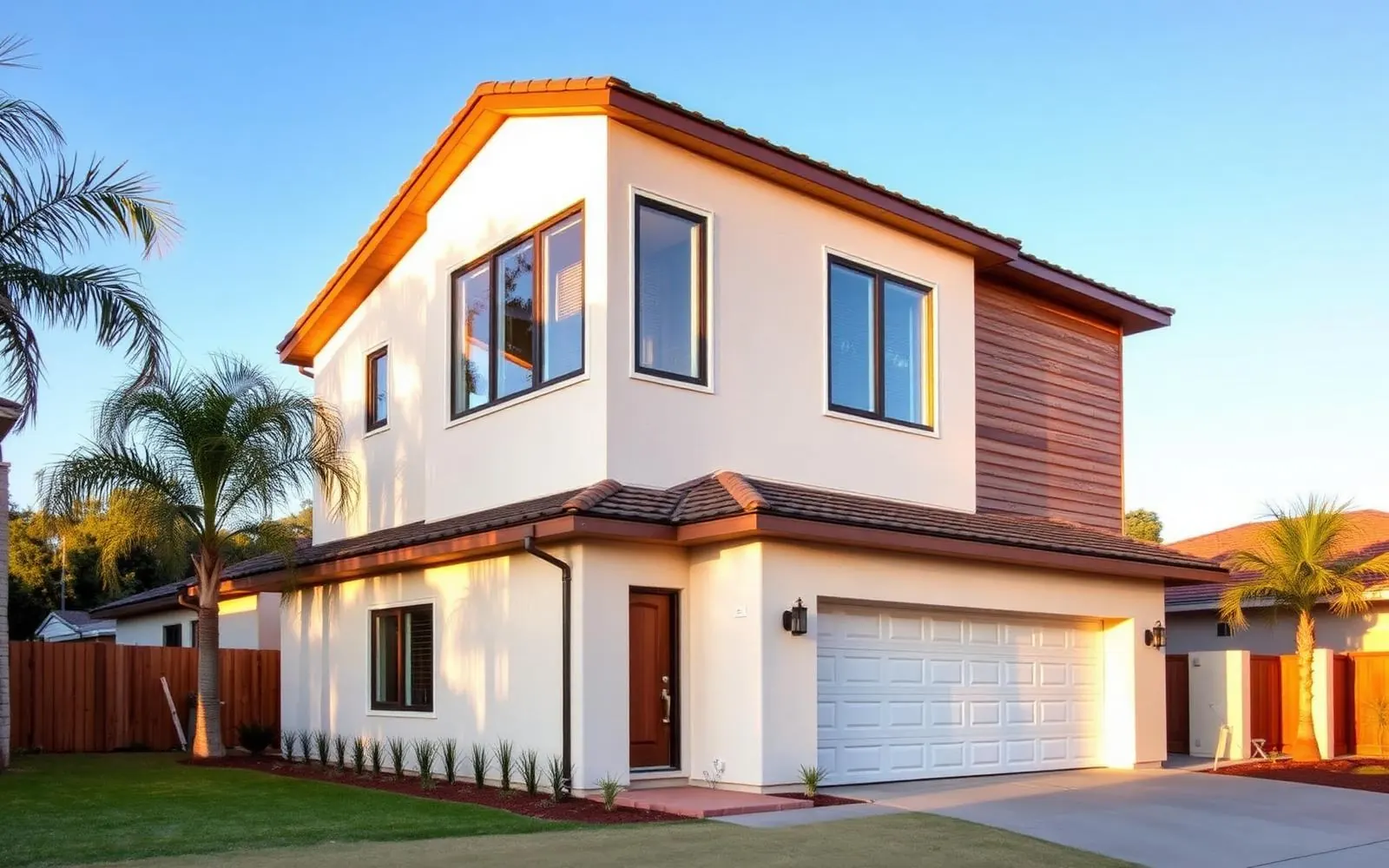
Homeowners who need more space usually consider two directions: build a backyard ADU or add a second story to the existing house. Both are valid, but they solve different problems. The right choice comes down to how you plan to use the space, what your lot allows, and how you want to pay for it.
This is general planning information from HomeAdd, not legal, zoning, or engineering advice for your property. Submittal requirements, review paths, overlays, and fees vary by jurisdiction and change over time. Confirm current requirements with the agency that has authority over your parcel before making commitments.
Side-by-side comparison
| Factor | Backyard ADU | Second-Story Addition |
|---|---|---|
| Use of space | Rental income, guest house, family member | More bedrooms or living space for main house |
| Permit path | Often streamlined under state ADU law | Standard addition permitting, more zoning review |
| Structural work | New detached structure; main house untouched | Existing foundation and framing evaluated and often reinforced |
| Disruption | Lower; work happens in the yard | Higher; roof and main structure affected |
| Yard impact | Consumes yard space | Preserves yard |
| Rental potential | Can be rented separately | Cannot be rented separately from main house |
When an ADU is the better fit
An ADU makes sense when you want a separate living space. That might mean rental income, a home for an adult child or aging parent, or a guest house with privacy. Because ADUs are governed by state law, they often have a clearer, faster permit path than standard additions.
The tradeoff is yard space. A detached ADU consumes part of your lot. If your yard is small or you value outdoor space, an attached ADU or a garage conversion may be a better use of existing footprint.
When a second-story addition is the better fit
Building up is the right choice when you need more space inside the main house. Families adding bedrooms, expanding a primary suite, or creating a home office often prefer this option because it keeps everyone under one roof and preserves the yard.
The tradeoff is structural complexity and disruption. The existing foundation and framing must be able to support a second story, and the roof must be removed and rebuilt. That work affects the main house more than a backyard ADU would.
Cost considerations
ADUs are often less expensive per square foot because they avoid structural work on the main house. Second-story additions can be more expensive because of reinforcement, stairs, and roof work. However, site conditions, finishes, and utility work can shift the comparison. A written proposal for each option on your specific lot is the only reliable way to compare.
Compare both options on your lot
HomeAdd can evaluate your property for both an ADU and a second-story addition, then give you an honest comparison of feasibility, cost, and timeline. That lets you choose based on facts rather than assumptions.
Not sure which direction to go?
Free property check — we review setbacks, utilities, and zoning and tell you honestly what's buildable.
Which adds more value: an ADU or a second-story addition?+
It depends on your goals. An ADU can generate rental income and is often governed by state streamlining rules. A second-story addition expands the main house and may be the better choice if you need more bedrooms or living space for your own household. Both add value, but in different ways.
Is an ADU cheaper than a second-story addition?+
Often yes, but not always. ADUs avoid disturbing the main house's structure and can use simpler foundations. Second-story additions require structural reinforcement of the existing house, stair access, and roof work. Site conditions and finishes can shift the comparison either way.
Which is more disruptive to live through?+
A second-story addition is usually more disruptive because it affects the roof, structure, and sometimes the main floor. A detached ADU is built in the yard and may allow you to stay in the house with less interruption. An attached ADU falls somewhere in between.
Can I rent out a second-story addition?+
No. A second-story addition is part of the main dwelling unit and cannot be rented separately unless the entire home is rented. An ADU is a separate dwelling unit and can be rented in most jurisdictions, subject to local rules.
Which has an easier permit path?+
ADUs often benefit from state-mandated streamlining, including ministerial review and limits on local parking and utility connection requirements. Second-story additions follow standard addition permitting, which is more discretionary and may involve more zoning review.
How do I choose between the two?+
Start with how you will use the space. If you need income or separate living quarters, lean toward an ADU. If you need more space inside your main house, lean toward building up. A feasibility review comparing both options on your specific lot is the best next step.