
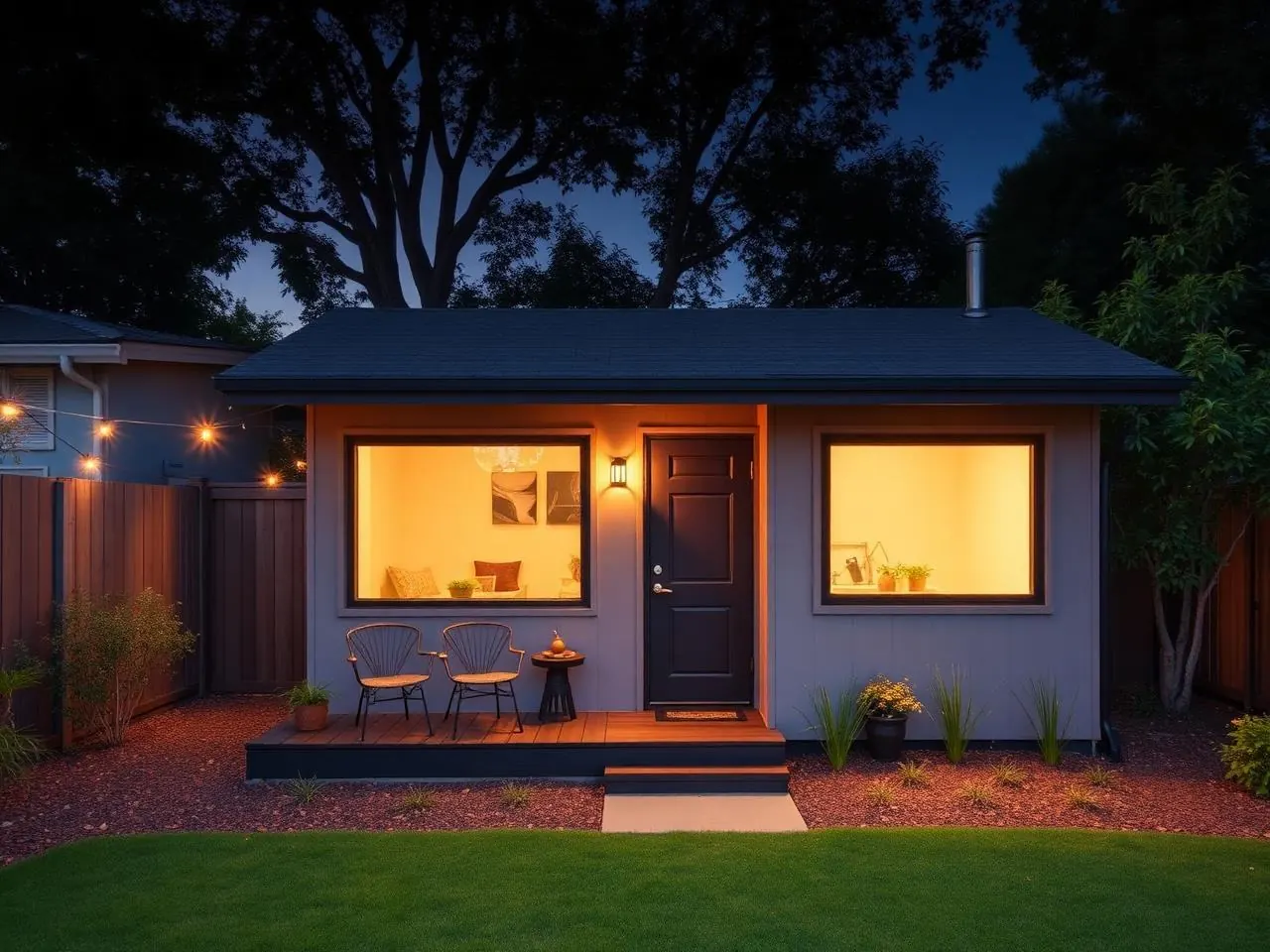
Homeowners usually come to us with a goal — a place for a parent, a rental, a private suite for a grown child — not a unit type. The JADU-or-ADU decision follows from that goal and from what your house and lot can support. The short version: a JADU carves space out of the home you already have; an ADU creates a complete second home.
The differences at a glance
| Factor | Junior ADU (JADU) | Standard ADU |
|---|---|---|
| Location | Within the existing single-family home | Detached, attached, or converted space |
| Size | Up to 500 sq ft | Larger, subject to state and local limits |
| Kitchen | Efficiency kitchen | Full kitchen |
| Bathroom | May share with the main house | Its own |
| Entrance | Separate exterior entrance required | Separate entrance |
| Owner-occupancy | Generally required (main home or JADU) | Not required statewide |
When a junior ADU makes sense
You have underused space inside the house
A spare bedroom with an adjacent bathroom near an exterior wall is the classic candidate. Adding an exterior door and an efficiency kitchen can create a private unit without a new foundation or roof. See our junior ADU service.
You plan to keep living on the property
Because owner-occupancy is generally required, a JADU suits households that will stay — multigenerational families, or owners who want modest rental income while living in the main home.
You want the lightest construction footprint
Work stays inside an existing structure, so there is typically less sitework and a shorter build than new construction. Plumbing, electrical capacity, and fire separation still need to be engineered properly.
When a standard ADU is the better choice
You need a full, independent home
A tenant or family member who needs a full kitchen, a private bath, and more room is better served by a detached ADU or attached ADU.
You don't want to give up interior space
A JADU takes square footage from the main house. If the family needs every room, building in the yard — or converting a detached garage — keeps the main home intact. Compare options in attached vs. detached ADU.
You want long-term flexibility
A standard ADU without an owner-occupancy covenant can leave more options open if you later move and rent both units. Value considerations are covered in how much value an ADU adds.
Can you build both?
On many single-family lots, California allows one ADU plus one JADU. Some families pair a backyard ADU for rental with a JADU for a relative. Whether your parcel supports both depends on zoning, setbacks, utility capacity, and fire access — the questions answered in a backyard feasibility review.
What drives the budget for each
- Plumbing route — distance from existing drain and supply lines to the new kitchen or bath.
- Electrical capacity — whether the existing panel can carry the added load.
- Exterior opening — the new entry door, any structural header, and exterior finishes.
- Foundation and shell — the large cost an ADU adds that a JADU usually avoids.
- Finishes — cabinetry, flooring, and fixtures move every budget.
For preliminary planning ranges, use our ADU & home addition cost calculator or read how much it costs to build an ADU. A written proposal follows feasibility and design.
This is general planning information from HomeAdd, not legal advice or an approval determination. State law, local ordinances, and site conditions vary and change. Verify current requirements with your local building and planning department and the California HCD ADU Handbook.
Not sure whether a JADU or ADU fits your home?
Tell us about your house and goals. We review layout, utilities, and zoning across Los Angeles, Orange, and Ventura counties and give you a straight answer before design begins.
What is the main difference between a JADU and an ADU?+
A junior ADU is created inside the existing walls of a single-family home and is capped at 500 square feet. A standard ADU can be detached, attached, or a conversion, can be larger, and must be fully self-contained with its own kitchen and bathroom.
Does a junior ADU need its own bathroom?+
Not necessarily. State law allows a JADU to share a bathroom with the main house, as long as the unit has its own exterior entrance and an efficiency kitchen. Many homeowners still add a private bathroom for comfort and rental appeal.
Do I have to live on the property to have a JADU?+
Generally yes. California requires owner-occupancy of either the main home or the JADU, usually recorded as a deed restriction. Standard ADUs currently do not carry that statewide owner-occupancy requirement. Confirm the current rule with your local jurisdiction.
Can I have both an ADU and a junior ADU on one lot?+
On many single-family lots in California, yes — state law contemplates one ADU plus one JADU. Whether your specific parcel qualifies depends on zoning, setbacks, utilities, and fire access, which a feasibility review confirms.
Is a junior ADU cheaper than a standard ADU?+
Usually, because it works within an existing structure and has a smaller kitchen. The final budget still depends on plumbing routes, the electrical panel, the new exterior door, and finishes, so every project needs its own written proposal.
Can an attached garage become a junior ADU?+
State law treats an attached garage as part of the single-family residence for JADU purposes, so it can be an option. Fire separation, egress, and energy code still have to be met, and some homeowners find a full garage conversion ADU a better fit.
Related reading: What is an ADU? · ADU size limits · Garage conversion cost in LA