
Quick answer
A pre-approved (standard) ADU plan has already passed code review, so plan check is shorter. You still need a site-specific submittal and a building permit, and you may have little room to change it. A custom ADU is designed around your lot and goals and goes through full plan check. In the City of Los Angeles, standard plans are privately owned and bought from the designer. In unincorporated LA County, the County offers three plans free.
Key takeaways
- A standard plan does not replace a building permit. You still submit site-specific plans showing how the plan fits your lot.
- In the City of LA, plans in the LADBS Standard Plan catalog belong to their designers, so you contract with the designer to use one.
- LA County's three County-owned plans (unincorporated areas only) are free but cannot be changed beyond mirroring or rotating.
- Lot conditions such as soil can still require site-specific foundation or structural work.
- State law requires ministerial approval of ADU permit applications, with deadlines for completeness and decisions.
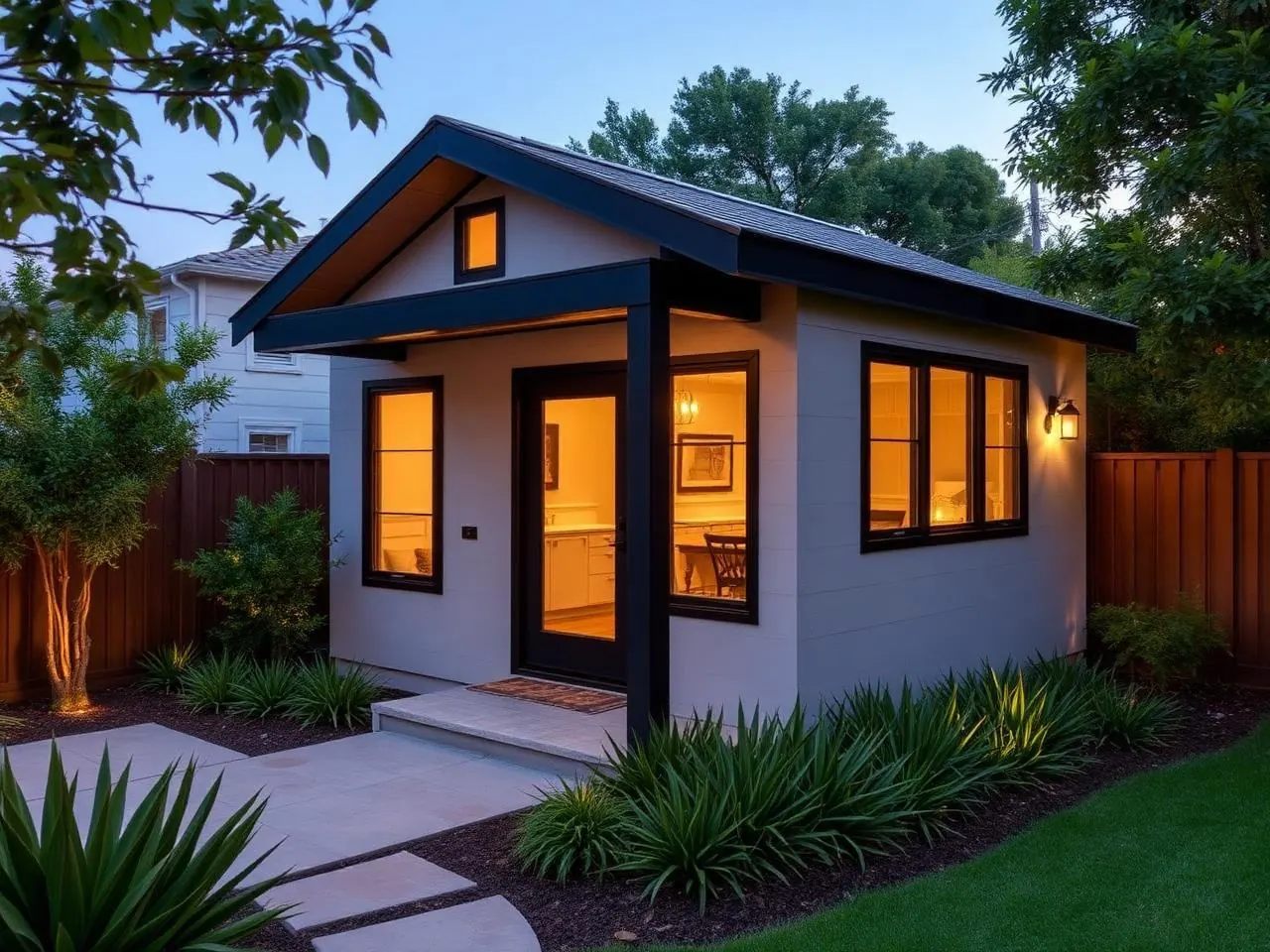
Whether you plan a detached ADU in the backyard or an attached ADU that shares a wall with the house, there are two ways to get to a permit set: start from a plan an agency has already reviewed, or design one for your lot. Which path is available depends first on who reviews your address. The City of Los Angeles and unincorporated Los Angeles County run different programs, and cities such as Burbank and Glendale run their own building departments.
This is general planning information from HomeAdd, not legal advice for your property. Program details, submittal requirements and fees change over time. Confirm current requirements with the agency that has authority over your parcel.
What "pre-approved" means in the City of Los Angeles
The Los Angeles Department of Building and Safety (LADBS) runs a Standard Plan Program. LADBS Standard Plans are pre-approved architectural and engineering plans, and LADBS says using one "greatly reduces the time required for plan check." Plans are not approved until LADBS verifies compliance with the Building, Residential, Green Building and Energy Codes.
The plans belong to their designers
Standard plans are privately owned. To use one, you contact the plan owner to buy a copy and to learn its pricing and terms. LADBS notes that pre-approval is not an endorsement of the designer or firm.
A standard plan does not replace the permit
Possessing a standard plan does not waive the building permit. You need a wet-stamped, signed copy of the plan plus plans showing how it is adapted to your site. Submittal is through ePlanLA, and inspections are required during construction, before the Certificate of Occupancy. Once an owner chooses a plan, plan check and permit fees are based on total project valuation.
It may not fit your property
- LADBS says a pre-approved design may not work for every property because of site-specific constraints, and advises checking feasibility with LADBS before contracting.
- Designs may or may not be customizable, and adjustments may add cost and need additional City review.
- Local soil conditions may require site-specific foundation work, structural design or engineering.
- Optionally, the City's AI pre-plan check ("Know Before You Go") lets you upload a customized plan before submitting.
For how plan check fits into the full City of LA approval path, see the ADU permit timeline in Los Angeles.
LA County's pre-approved ADU plans (unincorporated areas only)
Los Angeles County's Pre-Approved ADU Plans program applies only to unincorporated Los Angeles County, where County Building and Safety issues permits. Cities such as Los Angeles, Burbank and Glendale run their own building departments, so this program does not apply there.
The plans are pre-approved by Regional Planning and Public Works Building and Safety. The County owns three plans that homeowners can use free of charge:
- Plan A: 1,200 sq ft, 3 bedrooms, 1 bath.
- Plan B: 1,200 sq ft, 2 bedrooms, 1 bath.
- Plan C: 800 sq ft, 1 bedroom, 1 bath.
What you can and cannot change
Changes are not allowed. A County plan may be oriented in any direction or mirrored, and that is all.
What you still need
- An approved site-specific plot plan from Regional Planning.
- Site-specific Title 24 energy calculations and agency referral items.
- An application filed via EPIC-LA (unincorporated areas only) or at a district office.
After the permit is issued, an inspection must be requested within 12 months, and a follow-up inspection every 180 days.
When a custom ADU makes more sense
A standard plan is simplest when your lot can take the plan as drawn. A custom design is built around your lot and goals, and goes through full plan check. It tends to make more sense when:
- The lot is irregular or sloped. Setbacks, grade changes and the position of the house can leave a footprint that no catalog plan fits.
- You need a size or layout the catalog doesn't offer. A specific bedroom count, a wider living area or an accessible layout may not exist as a standard plan. Our ADU floor plan guide covers what works at each size, and the ADU size limits guide covers the state size and height rules.
- You want it to match the main house. Rooflines, materials and window proportions that echo the existing home are design choices a fixed plan may not allow.
- You want changes the County plans don't allow. In unincorporated LA County, the free plans can only be rotated or mirrored, so any other change means a different path.
- You are thinking about going up. A unit over a garage or a two-story ADU raises height and structural questions; see two-story ADUs in Los Angeles.
What state law says about ADU approvals (both paths)
Whether you start from a standard plan or a custom design, California's Government Code § 66317 sets the review rules:
- § 66317(a)(1): an ADU permit application is considered and approved ministerially, without discretionary review or a hearing.
- § 66317(a)(2)(A): the agency must tell the applicant in writing whether the application is complete within 15 business days of receiving it.
- § 66317(a)(3): the agency approves or denies within 60 days of receiving a completed application, where there is an existing single-family or multifamily dwelling on the lot.
Questions to ask before you choose
- Does the plan fit the setbacks and utilities on my lot?
- Can it be modified, and what would changes cost?
- Who prepares the site-specific submittal and the Title 24 energy calculations?
- Who pulls the permit?
For budgeting either path, the ADU cost guide for Los Angeles and Ventura explains what moves the number, and the cost estimator gives a rough starting range. For ADUs in the city itself, see ADU builders in Los Angeles, or the Los Angeles County service area for the rest of the county.
Frequently asked questions
Is a pre-approved ADU plan the same as a permit?+
No. A standard plan has already been reviewed for code compliance, but you still submit site-specific plans and obtain a building permit before construction.
Are LADBS standard ADU plans free?+
No. Plans in the City of Los Angeles catalog are privately owned. You contact the plan owner for access, pricing and terms of use.
Can I change a pre-approved ADU plan?+
It depends. In the City of LA, some designs can be customized, but changes may add cost and need additional City review. LA County's own pre-approved plans can only be rotated or mirrored.
Who can use LA County's free ADU plans?+
Owners in unincorporated Los Angeles County, where the County's Building and Safety issues permits. Cities with their own building departments have their own programs.
How long does the city have to approve an ADU permit?+
Under Gov. Code §66317, the agency must decide whether an application is complete within 15 business days, and approve or deny a complete application within 60 days when there is an existing home on the lot.
Not sure a standard plan fits your lot?
Send us your address and what you want to build. We'll check the jurisdiction, setbacks and site conditions and talk through whether a standard plan or a custom design fits — no obligation.
Plan your project
Sources
Official references for the rules mentioned above. Local rules and site conditions vary; confirm with the agency that reviews your address.