
Quick answer
What most people call a backyard guest house is "accessory living quarters" in the Los Angeles zoning code: temporary guest use only, no kitchen, and it cannot be rented. An ADU is a complete independent home with a kitchen and bathroom, and it can be rented. In the R1 zone, accessory living quarters also need a lot of at least 10,000 sq ft.
Key takeaways
- In LA's code, a no-kitchen guest building for visiting guests is "accessory living quarters" — it may not be rented or used as a separate dwelling.
- An ADU must have permanent provisions for living, sleeping, eating, cooking and sanitation, so it includes a kitchen.
- An ADU can be rented separately from the main house but generally cannot be sold separately.
- The city cannot require you to live on the property to have an ADU, but it can require rentals of 30 days or longer.
- In the R1 zone, accessory living quarters are not allowed on lots under 10,000 sq ft.
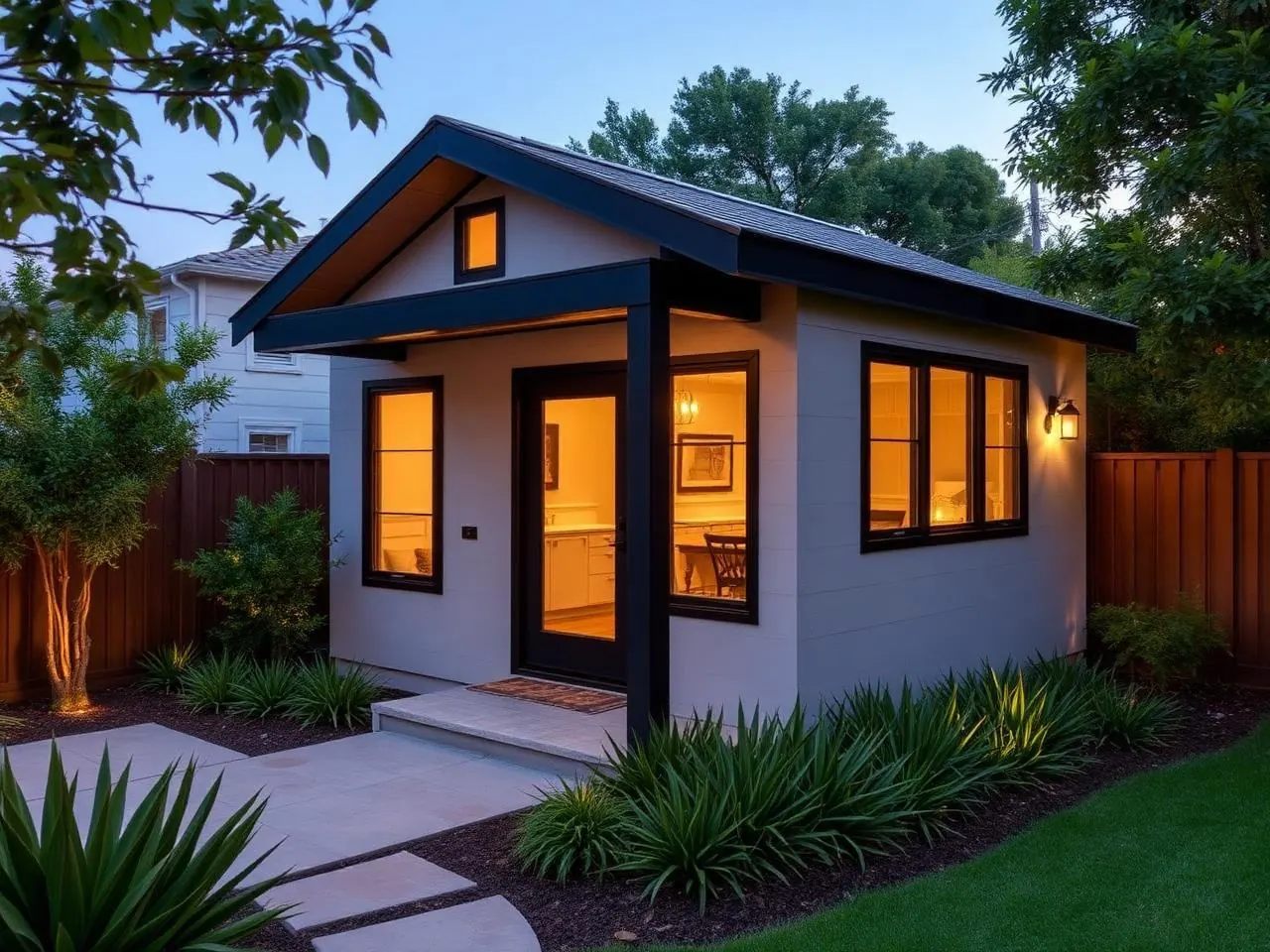
A small building in the backyard can be a place for visiting family, a studio, or a home someone lives in full time. In the City of Los Angeles, which of those it can be depends on how the code classifies it. This guide compares the code's guest building, accessory living quarters, with an accessory dwelling unit (ADU). For the basics of ADU types, start with what an ADU is.
This is general planning information from HomeAdd, not legal advice for your property. Zoning rules differ by zone and change over time. Confirm current requirements with Los Angeles City Planning and LADBS for your parcel.
What "guest house" means in the LA zoning code
The building homeowners usually call a guest house is defined in LAMC § 12.03 as accessory living quarters: an accessory building used only as the temporary dwelling of guests of the people who live on the property. Accessory living quarters have no kitchen facilities, and they may not be rented or otherwise used as a separate dwelling unit.
The code also has a separate term, guest house, for a dwelling with no more than five guest rooms or suites and no kitchen. That is a lodging-type use, not the backyard cottage most homeowners have in mind.
Where accessory living quarters are allowed (R1)
In the R1 one-family zone, LAMC § 12.08 A.7 permits accessory buildings, including accessory living quarters, with conditions:
- They are not allowed on a lot of less than 10,000 square feet.
- They may be in one building that does not exceed two stories.
These conditions are for the R1 zone. Other residential zones, such as RE, RS and RA, have their own code sections, so check your parcel's zone in ZIMAS before planning around them.
What makes a unit an ADU
State law defines an ADU in Government Code § 66313(a) as an attached or detached dwelling unit that gives one or more people complete independent living facilities, on a lot with a proposed or existing primary residence. It must include permanent provisions for living, sleeping, eating, cooking and sanitation. In other words, an ADU has a kitchen and a bathroom; a guest building without a kitchen is not an ADU.
Junior ADUs
Under § 66313(d), a junior ADU (JADU) is no more than 500 square feet and is contained entirely within a single-family residence. It may have its own bathroom or share one with the house. A JADU must include at least an efficiency kitchen, which the HCD ADU Handbook (March 2026) describes as a cooking facility with appliances, a food-preparation counter and storage cabinets. Our junior ADU vs. ADU guide compares the two in detail.
How Los Angeles defines it
The ADU definition in LAMC § 12.03 also includes efficiency units, manufactured homes and Movable Tiny Houses. The LADBS ADU page says the city's ADU rules cover JADUs and Movable Tiny Houses as well.
Renting and selling
- Accessory living quarters: may not be rented at all (LAMC § 12.03).
- ADU rentals: under Gov. Code § 66314(d)(1), an ADU may be rented separately from the primary residence.
- ADU sales: the same section says an ADU may not be sold or otherwise conveyed separately from the primary residence, except as provided in Article 4 (starting at § 66340).
- Owner occupancy and rental terms: under Gov. Code § 66315, a city may not impose an owner-occupancy requirement on an ADU, but it may require that rentals be for terms of 30 days or longer.
If rental income is the goal, the ADU rental income guide covers how to think about it.
Which one fits your plans
- Occasional guests, a home office or a studio, with no kitchen: you may not need a separate dwelling at all. For a building where visiting guests stay, the code's category is accessory living quarters, if your zone and lot allow it.
- A family member living independently, or rental income: that needs a kitchen and a separate dwelling, which means an ADU, such as a detached ADU in the yard or a junior ADU inside the house.
- An R1 lot under 10,000 square feet: accessory living quarters are ruled out there, so an ADU is the path to consider.
Whether an ADU fits on your lot comes down to setbacks, utilities and access; see can I build an ADU in my LA backyard? For a rough starting budget, try the cost estimator.
Check which zoning code applies
Los Angeles is replacing its zoning code area by area. According to Los Angeles City Planning, the New Zoning Code (Chapter 1A) is in effect in the Downtown and Boyle Heights Community Plan Areas, and the existing code continues to apply elsewhere until those areas are updated. The definitions in this guide come from the existing code (Chapter 1). Use ZIMAS to check your property's zone.
For ADUs in the city, see ADU builders in Los Angeles; for the rest of the county, see the Los Angeles County service area.
Frequently asked questions
Is a guest house the same as an ADU in Los Angeles?+
No. In the LA zoning code, a backyard guest building for temporary guests is accessory living quarters: it has no kitchen and cannot be rented. An ADU is a complete independent home with permanent provisions for living, sleeping, eating, cooking and sanitation.
Can a guest house in LA have a kitchen?+
Not as accessory living quarters, which the code defines as having no kitchen facilities. A unit with a kitchen and full independent living facilities is an ADU and is permitted under the ADU rules.
Can I rent out my guest house?+
Accessory living quarters may not be rented or used as a separate dwelling unit. An ADU may be rented separately from the main house, and the city may require rentals of 30 days or longer.
How big does my lot need to be for a guest house in R1?+
In the R1 zone, accessory living quarters are not allowed on a lot smaller than 10,000 square feet.
Can I sell an ADU separately from my house?+
Generally no. State law lets an ADU be rented separately but not sold or conveyed separately from the primary residence, except under narrow exceptions in Gov. Code §66340 and following.
Not sure whether you need a guest house or an ADU?
Send us your address and how you plan to use the space. We'll check the zone and lot and talk through which option fits — no obligation.
Plan your project
Sources
Official references for the rules mentioned above. Local rules and site conditions vary; confirm with the agency that reviews your address.
- Los Angeles Municipal Code § 12.03 — Definitions
- Los Angeles Municipal Code § 12.08 — R1 One-Family Zone
- California Government Code § 66313 — ADU and JADU definitions
- California Government Code § 66314 — ADU ordinance standards
- California Government Code § 66315 — Owner occupancy
- LADBS — ADU resources
- California HCD — ADU Handbook (March 2026)
- Los Angeles City Planning — New Zoning Code
- Los Angeles City Planning — Zoning Search (ZIMAS)