
Quick answer
California ADU law (Gov. Code § 66311.5) bars impact fees on ADUs with 750 sq ft of interior livable space or less; larger ADUs are charged proportionately to the primary dwelling's square footage. School districts may, but are not required to, levy fees on ADUs over 500 sq ft. Any connection fee must be proportionate. Plan-check and permit fees still apply.
Key takeaways
- 750 sq ft of interior livable space or less: no impact fees under state ADU law.
- Larger than 750 sq ft: impact fees charged proportionately to the primary dwelling's square footage.
- School districts may, but are not required to, levy fees on ADUs over 500 sq ft.
- ADUs within existing space and JADUs are not a new residential use for connection fees.
- Plan-check, permit and inspection fees are not waived.
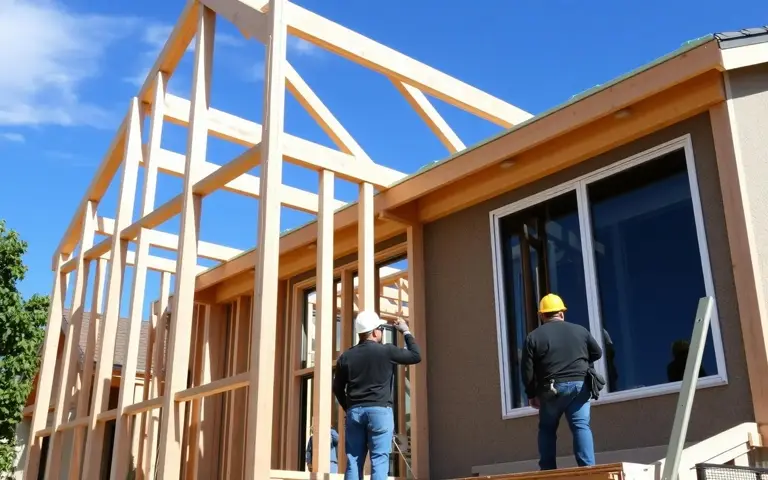
An ADU permit comes with several kinds of fees. Some are charged by the city or county for reviewing and inspecting the work. Some are charged by school districts. Some are utility connection charges. And some are development impact fees, which state ADU law limits. Knowing which is which keeps surprises out of your budget.
Development impact fees and the 750 square foot rule
Under California's ADU law (Government Code section 66311.5, subdivision (c), formerly section 66324), a local agency, special district or water corporation may not charge impact fees on an ADU with 750 square feet of interior livable space or less. For a larger ADU, any impact fee must be charged proportionately, in relation to the ADU's square footage compared with the primary dwelling's. See the statute text and the HCD ADU Handbook (March 2026), which reflects the 2025 amendments.
In practice, keeping a unit at or below 750 square feet of interior livable space can remove these fees entirely. That is one reason many homeowners choose a smaller layout or a junior ADU.
School fees
School districts may, but are not required to, levy developer fees on ADUs larger than 500 square feet (Education Code section 17620; Government Code section 66311.5(c)(3)). The district — not the city — sets and collects these, and you typically pay them before the building permit is issued. See Education Code section 17620.
Utility connection fees and capacity charges
Under Government Code section 66311.5(d), ADUs created within existing space and JADUs are not treated as a new residential use for utility connection fees or capacity charges, unless they are built at the same time as a new single-family home. Where a connection fee or capacity charge does apply, section 66311.5(e) requires it to be proportionate to the ADU's burden on the system, based on its square footage or the number of its drainage fixture units compared with the primary dwelling.
Separate from fees, the physical work of a new water meter, sewer lateral or electrical service can be a major cost. Our ADU utilities guide explains those.
Fees that still apply
- Plan-check and permit fees — set by each building department, usually based on valuation or size.
- Inspection, technology and records fees — small items that add up.
- Planning or zoning review fees — where the jurisdiction charges them.
- Fire department review — in some areas, including sprinkler or access review.
- Surveys, soils reports and energy compliance — not government fees, but part of the soft-cost budget.
Who sets fees in Los Angeles and Ventura County
- City of Los Angeles: LADBS plan-check and permit fees, with City Planning for zoning. See Los Angeles County.
- Other LA County cities and unincorporated areas: each city's building department, or LA County Public Works for unincorporated parcels.
- Ventura County: each city, or Ventura County RMA for unincorporated parcels. See Ventura County.
Fee schedules change, often every fiscal year. HomeAdd confirms the current schedule for your address during feasibility rather than using a rule of thumb.
How the proportional rule works, in plain terms
For an ADU larger than 750 square feet of interior livable space, the impact fee is scaled to the size of the main house rather than charged at the full new-home rate. As an illustration of the formula only: a 900 square foot ADU on a lot with an 1,800 square foot home is half the size of the home, so an agency applying this method would charge about half of the impact fee it would charge for a new home of that size. Actual fees depend on each agency's adopted schedule.
Junior ADUs and fees
A junior ADU of up to 500 square feet is built within the existing home, so it is generally not treated as a new residential use for connection fees, and at 500 square feet or less it falls well within the impact-fee exemption. It still needs a building permit and plan check. Owner-occupancy is required only if the JADU shares sanitation facilities with the main home (Government Code section 66333(b)). Compare the options in junior ADU vs. ADU.
When fees are paid
Most government fees are due at a specific point in the permit process. Plan-check fees are typically paid when plans are submitted. Permit fees, school fees and any impact fees are usually due before the building permit is issued. Utility connection charges are paid to the water, sewer or power provider when service is set up, which can be on a different schedule from the building department. Plan your cash flow, or your financing, so each payment is available when it is due; our ADU financing guide covers how owners typically fund each phase.
Common fee mistakes
- Designing a unit just over a fee threshold when a slightly smaller layout would avoid the fee.
- Assuming permit fees are waived because impact fees are.
- Forgetting school fees, which are paid to the district, not the building department.
- Using last year's fee schedule — many agencies update fees every fiscal year.
Putting fees in your budget
For planning, treat government fees as a separate line in your budget, next to design, engineering and construction. The cost estimator gives a preliminary planning range for the build, and our regional ADU cost guide shows how soft costs fit in. A written proposal after feasibility and design states which fees are included.
This is general planning information from HomeAdd, not legal, tax, lending or financial advice, and not an approval determination. State law, local ordinances, fee schedules and site conditions vary and change. Verify current requirements with your city or county and the official sources listed below.
Want your fees estimated before design?
We identify which department reviews your address and which fees are likely, so your preliminary planning range includes them from the start.
Do ADUs pay impact fees in California?+
State ADU law (Gov. Code § 66311.5(c)) bars impact fees on ADUs with 750 square feet of interior livable space or less. Larger ADUs can be charged impact fees only proportionately, in relation to the ADU's square footage compared with the primary dwelling's. Check your local schedule.
Do I have to pay school fees on an ADU?+
It depends on size and the district. School districts may, but are not required to, levy developer fees on ADUs larger than 500 square feet (Education Code § 17620; Gov. Code § 66311.5(c)(3)). The district sets and collects the fee, usually before the permit is issued.
Will I pay a utility connection fee for my ADU?+
ADUs created within existing space and JADUs are not treated as a new residential use for connection fees, unless built at the same time as a new single-family home (Gov. Code § 66311.5(d)). Where a connection fee or capacity charge applies, it must be proportionate to the ADU's square footage or drainage fixture units compared with the primary dwelling (§ 66311.5(e)). The physical utility work is a separate construction cost.
Are permit and plan-check fees waived for ADUs?+
Usually not. Building departments still charge plan-check, permit and inspection fees. The state limits are on impact fees and certain utility charges, not on ordinary permit processing fees.
How can I lower ADU fees?+
Keeping an ADU at 750 square feet of interior livable space or less avoids impact fees, and at 500 square feet or less school districts cannot levy developer fees on it. Creating the ADU within existing space can also avoid connection fees. Confirm the rules for your address before design.
Who sets ADU fees in Ventura County?+
Most addresses are handled by their city, such as Thousand Oaks, Simi Valley, Camarillo, Oxnard or Ventura. Ventura County RMA covers unincorporated Ventura County.
Related reading: ADU cost in LA and Ventura · LA ADU permit timeline · Ventura County ADU permits · Junior ADU vs. ADU
Plan your project
Sources
Official references for the rules mentioned above. Local rules and site conditions vary; confirm with the agency that reviews your address.