
Quick answer
Most California homeowners pay for ADU design and permits from savings and finance construction with a HELOC, home equity loan, cash-out refinance, or a renovation or construction loan. The best choice depends on your equity, current mortgage rate and the build's payment schedule. Grant programs such as CalHFA's have run in funding rounds, so check current availability.
Key takeaways
- Borrow against a full budget: soft costs, fees, construction and contingency.
- A HELOC or equity loan can keep a low first-mortgage rate in place.
- Renovation and construction loans may be based on value after completion.
- Ask lenders whether a program covers ADU construction on your property.
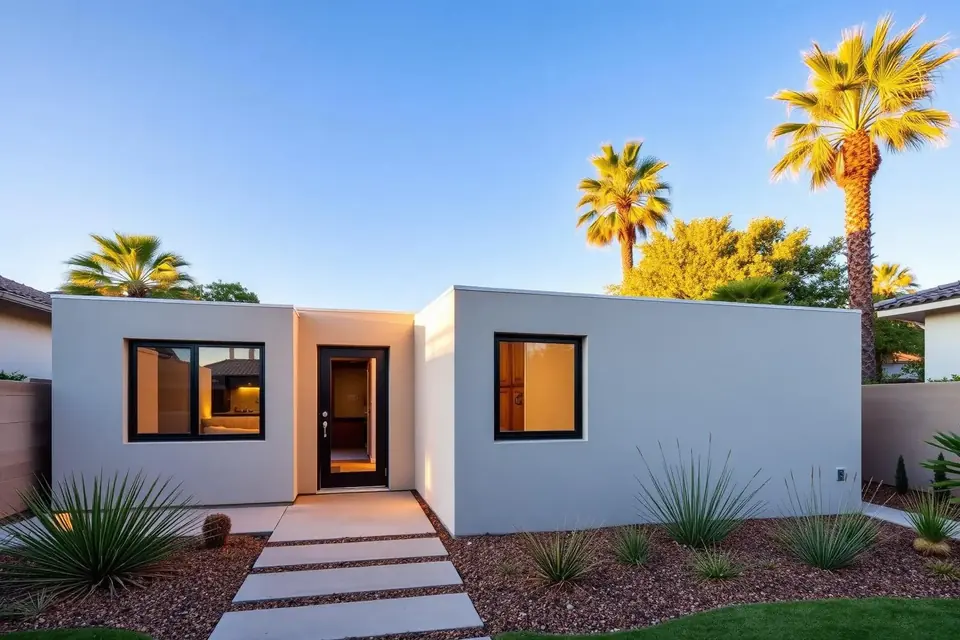
An ADU is a construction project, so financing it is closer to funding a remodel than buying a house. The amount you need comes from your scope — use the cost estimator or the ADU cost guide for a preliminary planning range — and the right loan depends on your equity, your current mortgage rate and how the contractor's payment schedule works.
HomeAdd is a contractor, not a lender. This guide explains common options so you can ask better questions; a licensed loan professional should advise on your situation.
The main options
1. Cash and savings
Paying cash avoids interest and lender inspections. Many owners use savings for the early phases — feasibility, design, engineering and permit fees — and finance construction. That keeps design moving while a loan is arranged.
2. Home equity line of credit (HELOC)
A HELOC lets you draw money as the project progresses and pay interest only on what you use. Rates are usually variable. It suits owners with substantial equity who want flexibility, and it leaves an existing low-rate first mortgage in place.
3. Home equity loan
A lump sum at a usually fixed rate, repaid on a set schedule. It fits a project with a clear contract amount and owners who prefer predictable payments.
4. Cash-out refinance
Replaces your current mortgage with a larger one and pays out the difference. It can make sense when current rates are close to or below your existing rate; if your current rate is much lower, a HELOC or equity loan often preserves it.
5. Renovation and construction loans
Some loans are based on the home's expected value after the ADU is built, which can help owners with less current equity. Conventional renovation programs and government-backed options such as HUD's FHA 203(k) program each have their own rules on eligible work, draw schedules and inspections. Ask lenders specifically whether a program covers ADU construction on your property type.
6. Grants and public programs
California has offered ADU assistance through programs such as the CalHFA ADU Grant Program, which has run in funding rounds with eligibility limits. Availability changes, so check the agency's current status before counting on it. Some cities also run their own ADU programs.
Quick comparison
| Option | Best when | Watch for |
|---|---|---|
| Cash | You have savings set aside | Keeping a reserve for surprises |
| HELOC | You have equity and want flexible draws | Variable rates |
| Home equity loan | The contract amount is clear | Borrowing too little for changes |
| Cash-out refinance | Market rates are near your current rate | Losing a low first-mortgage rate |
| Renovation or construction loan | Current equity is limited | Draw inspections and paperwork |
What lenders typically ask for
- A written contractor proposal or contract with scope and payment schedule.
- Plans, and sometimes the approved permit, before releasing construction funds.
- An appraisal, which for renovation loans may estimate the value after completion.
- Proof of income, credit and existing mortgage details.
Some owners ask whether future rent can help them qualify. Lender policies differ, so ask directly; for planning, our ADU rental income guide explains how to estimate rent conservatively, and does an ADU add value? covers resale considerations.
Build a realistic budget before you borrow
Lenders lend against a number, so the number has to be solid. A realistic ADU budget has four parts: design and engineering, government fees, construction, and a contingency for site and utility surprises. Owners who borrow only the headline construction figure are the ones who end up short.
- Soft costs: architectural design, structural engineering, energy compliance and any surveys or soils reports.
- Fees: plan check, permits, and any school or impact fees — see ADU impact fees.
- Construction: the contract amount, including utility connections and site work.
- Contingency: a reserve for conditions found once work starts.
Questions to ask a lender
- Does this loan cover ADU construction on my property type?
- Is the amount based on today's value or the value after completion?
- How are funds released — a lump sum, draws, or reimbursements after inspection?
- Can design and permit costs already paid be counted?
- What happens if the build schedule runs longer than planned?
Paying for each phase
An ADU is paid for in stages, and each stage has a different financing need. Early work is smaller and happens before any lender will release construction money; later work is larger and tied to inspections.
- Feasibility and design: usually paid from savings, because most construction loans fund only after plans exist.
- Engineering, energy compliance and plan check: also early, and often paid out of pocket or from a HELOC already in place.
- Permit and school or impact fees: due before the permit is issued, so the money must be ready at that moment.
- Construction: the largest share, paid in progress payments as defined milestones are completed.
- Final items: utility hookups, final inspection and closeout, which some loans hold back until the end.
Knowing this sequence helps you choose. A HELOC opened early can fund design and fees; a construction or renovation loan can then cover the build. Owners using one lump sum should make sure it is large enough for every phase, including contingency.
Match the money to the schedule
Design and permits come before construction, often for months. Line up financing so funds are available when construction starts, and keep a contingency for site and utility surprises. Our process page shows how feasibility, design, permits and construction are sequenced.
This is general planning information from HomeAdd, not legal, tax, lending or financial advice, and not an approval determination. State law, local ordinances, fee schedules and site conditions vary and change. Verify current requirements with your city or county and the official sources listed below.
Need a realistic budget before you talk to a lender?
We review feasibility and give you a preliminary planning range so your lender conversation starts with real scope, then a written proposal after design.
What is the most common way to finance an ADU?+
Many homeowners pay for design and permits from savings and finance construction with a HELOC, a home equity loan, a cash-out refinance or a renovation or construction loan. The best fit depends on equity, current mortgage rate and the payment schedule.
Can I get an ADU loan with little home equity?+
Possibly. Some renovation and construction loans are based on the expected value after the ADU is built. Program rules vary, so ask lenders whether they cover ADU construction for your property.
Are there ADU grants in California?+
California has offered ADU assistance through programs such as the CalHFA ADU Grant Program, which has run in funding rounds with eligibility limits. Check CalHFA and your city for what is currently available.
Should I refinance or use a HELOC?+
If your current mortgage rate is much lower than today's rates, a HELOC or home equity loan often keeps that rate in place. A cash-out refinance can make sense when rates are close. A licensed loan professional should compare them for you.
What does a lender need from my contractor?+
Usually a written proposal or contract with scope and payment schedule, plans, and sometimes the approved permit before construction funds are released.
Related reading: How to finance a home addition · ADU cost guide · ADU rental income · Detached ADU service
Plan your project
Sources
Official references for the rules mentioned above. Local rules and site conditions vary; confirm with the agency that reviews your address.