
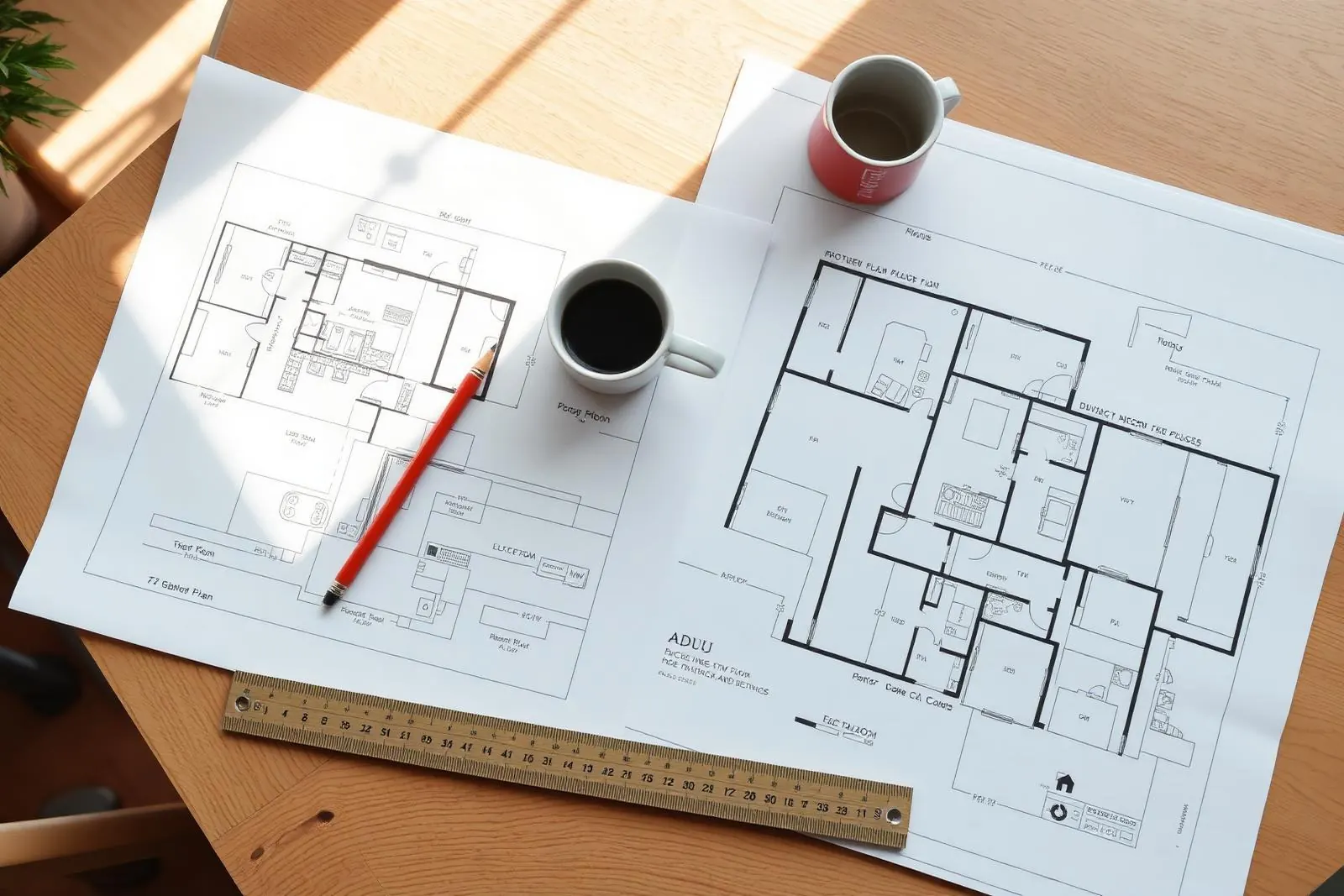
Homeowners usually ask "how long does the permit take?" when the better question is "what has to happen before the clock even starts?" In Orange County, the reviewing department changes from city to city, and the biggest schedule variable is the quality of the package you submit — not the counter you submit it to.
This is general planning information from HomeAdd, not legal advice for your property. Submittal requirements, review paths, and fees vary by city and change over time. Confirm current requirements with the department that has authority over your parcel.
First: which of Orange County's departments reviews yours
If your address is inside an incorporated city — Irvine, Newport Beach, Costa Mesa, Huntington Beach, or any other — that city's planning and building departments review the permit. OC Public Works handles unincorporated Orange County parcels only. Each department publishes its own submittal checklist, fee schedule, and review workload, and they are not interchangeable. A neighbor's timeline in another city tells you almost nothing about yours.
The state framework every OC city must follow
California's ADU law sets the floor for every local process. Compliant ADU applications are approved ministerially — no discretionary hearings, no neighbor approval — and under Government Code § 65852.2 the agency must act on a complete application within 60 days. The California HCD ADU Handbook is the authoritative summary of those statewide rules.
Two words in that framework carry the weight: complete application. The 60-day clock starts when the city accepts a package that contains everything its checklist requires. A submittal missing sheets, forms, or calculations does not start the clock — it starts a correspondence. This is why the preparation phase, not the review phase, is where timelines are won or lost.
The sequence, in order
1. Feasibility and jurisdiction confirmation
Before design: confirm the reviewing department, pull the parcel's zoning and any overlays, check coastal-zone status, and identify HOA review if one exists. This is where deal-breakers surface while they are still free to fix.
2. Design and the permit set
A complete package typically includes a site plan, floor plans and elevations, structural drawings and calculations, and energy compliance documentation. Reviewers issue corrections when documents disagree with each other, so coordination between the architectural, structural, and energy sheets matters more than page count.
3. Submittal and completeness check
The city reviews the package for completeness before the statutory clock starts. Anything missing is requested up front — plan for this step rather than being surprised by it.
4. Plan check and corrections
Reviewers return corrections; your team responds and resubmits. Most projects see at least one correction cycle. The response time on the applicant's side is often the longer side of the schedule, which is why we treat correction turnaround as a priority task, not a queue.
5. Issuance
Once all reviewers sign off, fees are calculated and the permit issues. Fees vary by city, valuation, and scope, so you should hold a written fee expectation before this point — not discover it at the counter.
The parallel track: HOA architectural review
In Irvine and most planned communities, the HOA reviews exterior design on its own calendar. California law limits how an HOA can restrict an ADU, but materials, colors, and roof forms typically still go through the architectural committee. We submit the HOA package in parallel with the city application so the two tracks resolve together instead of back-to-back.
Coastal-zone parcels
Properties near the Huntington Beach and Newport Beach coasts can sit inside the California Coastal Zone, where additional coastal review may apply alongside the building permit. State law has narrowed how coastal rules treat ADUs, but the answer is parcel-specific. We verify coastal jurisdiction during feasibility — finding it after design is finished is the expensive version.
What actually slows an OC ADU permit down
- Incomplete submittals. The statutory clock never starts on a package the city cannot accept.
- Uncoordinated documents. Structural, architectural, and energy sheets that contradict each other generate correction cycles.
- Unpermitted existing work. Prior unpermitted construction on the property usually has to be resolved as part of the project.
- Slow correction responses. The applicant's side of the clock is often the longer side.
- Scope changes after submittal. A mid-review change can trigger revision review.
- HOA review started late. A sequential HOA track can add weeks that a parallel track would not.
How HomeAdd manages this for OC homeowners
We confirm jurisdiction and overlays before design, produce a coordinated permit set aimed at the actual checklist for your city, run the HOA track in parallel where one exists, and manage corrections and inspection coordination through issuance and construction. Our process page walks the full sequence, and the Orange County ADU cost guide covers the budget side. Working in Los Angeles instead? Compare the LA ADU permit timeline.
Frequently asked questions
How long does an ADU permit take in Orange County?+
We do not publish generic timelines because real durations depend on the city, the completeness of the submittal, and how many correction cycles the plans need. California law requires agencies to act on a complete ADU application within 60 days, but the clock starts on a complete submittal — so the quality of the permit set is what actually controls the schedule.
What is the 60-day rule for ADU permits?+
Under California's ADU law (Government Code § 65852.2), a local agency must approve or deny a complete ADU application within 60 days of receiving it, and compliant ADUs are approved ministerially — without discretionary hearings. The California HCD ADU Handbook explains the framework every city must follow.
Do all Orange County cities follow the same permit process?+
No. Each incorporated city — Irvine, Newport Beach, Costa Mesa, Huntington Beach, and the rest — runs its own planning and building departments with its own submittal checklists and review workloads. OC Public Works handles only unincorporated Orange County parcels. Confirm the jurisdiction for your address before assuming any process detail.
Does my HOA affect the permit timeline?+
The HOA does not issue the permit, and California law limits how HOAs may restrict ADUs. But architectural review of exterior design runs on the HOA's own calendar, so we submit the HOA package in parallel with the city application rather than in sequence — treating it as a second track, not an afterthought.
What if my property is in the coastal zone?+
Parcels inside the California Coastal Zone can require coastal review in addition to the building permit. State law has narrowed how coastal rules apply to ADUs, but jurisdiction-specific questions remain, so we verify coastal status for the parcel during feasibility and plan the schedule accordingly.
What slows ADU approvals down the most?+
Incomplete submittals, documents that contradict each other, unpermitted existing work discovered during review, slow responses to correction letters, and scope changes after submittal. Nearly all of these are on the applicant's side of the counter, which is why preparation quality matters more than the city's backlog.
Want a permit path mapped for your OC address?
We'll confirm your reviewing department, pull your parcel's zoning and overlays, and lay out the realistic sequence for your project — no obligation.