
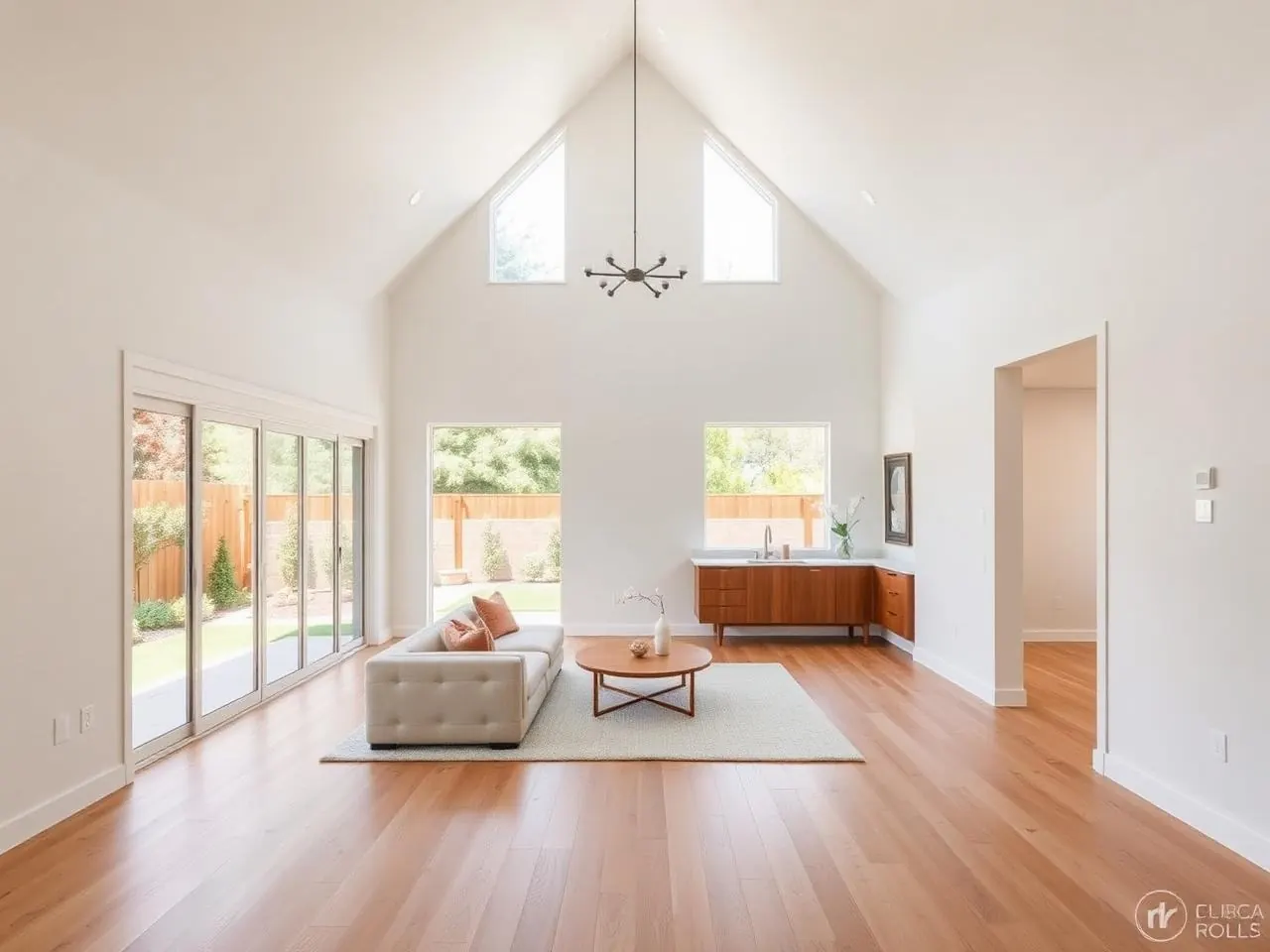
Ventura County lots tend to offer something LA and OC lots often do not: room. Flat Simi Valley tract lots can take a full-size detached unit, and Conejo Valley parcels are generous by coastal standards. The trade-off is that Ventura County's site conditions — slope, fire zones, protected oaks — are the ones most likely to move a budget, and they deserve to be priced in from the start.
These are preliminary planning ranges for the Ventura County market in 2026, not quotes. Every project's price depends on design, jurisdiction, site conditions, utilities, and finishes. HomeAdd provides a detailed construction proposal after feasibility and design — never a fixed price sight-unseen.
Preliminary planning ranges by ADU type
These are the same ranges we publish in our multi-county ADU cost guide, based on design-build construction with mid-range finishes on a straightforward lot. Flat tract lots in Simi Valley often land comfortably inside them.
| Project type | Planning range | What drives it |
|---|---|---|
| Garage conversion ADU (400–500 sq ft) | starting at $85K | Existing slab and walls reused; cost driven by insulation, egress, plumbing runs, and panel capacity. |
| Junior ADU inside the house (300–500 sq ft) | starting at $60K | No new foundation. Efficiency kitchen, private entry, and whether the bath is shared or private. |
| Detached studio ADU (400–500 sq ft) | starting at $175K | New foundation, framing, roof, and full utility trenching from the main house. |
| Detached 1-bedroom ADU (600–800 sq ft) | starting at $240K | Larger envelope, separated bedroom, dedicated laundry, upgraded finishes. |
| Detached 2–3 bedroom ADU (800–1,200 sq ft) | starting at $330K | Bigger structure plus more MEP, more site work, and often a service upgrade. |
| Above-garage or two-story ADU | starting at $240K | Structural retrofit of the garage below, stairs, and shear/foundation strengthening. |
Want to model your own configuration? Use the HomeAdd cost estimator for a tailored preliminary range.
The Ventura County factors that move the number
Slope and grading
Many Thousand Oaks neighborhoods sit on graded pads with descending rear yards. Retaining, drainage, and engineered foundations add construction cost — real scope that belongs in the proposal, not a surprise at excavation.
Fire hazard severity zones
Hillside edges of the Conejo Valley and Simi Valley carry Very High Fire Hazard Severity Zone designations. Ember-resistant vents, ignition-resistant exterior materials, and clearance requirements are manageable line items — when they are identified during feasibility instead of mid-review.
Protected oaks
Thousand Oaks protects oak trees and their root zones aggressively. A protected oak can govern where the unit sits, what foundation it uses, and where utility trenches run, and an arborist report is commonly part of the package. We map trees before we draw.
City vs. county — and septic
Incorporated cities like Thousand Oaks and Simi Valley run their own departments and fee schedules; unincorporated parcels go through Ventura County RMA, where some properties are on septic systems that add evaluation requirements. Our Ventura County ADU permits guide explains who reviews what.
Hard costs vs. soft costs
A complete budget has two halves. Hard costs are construction — foundation, framing, MEP, finishes, and on a hillside lot the retaining and drainage work. Soft costs are design, structural engineering, energy compliance documentation, permit and plan-check fees, and any utility or school-district fees that apply. When you compare proposals, verify both halves are included; an incomplete proposal is not a cheaper one.
How to compare two proposals fairly
- Same scope? Design, engineering, permits, utility work, site work, finishes — line them up.
- Site work priced in? On a sloped or fire-zone lot, a proposal without those lines is incomplete.
- Allowances vs. selections. Low finish allowances look attractive and get spent through quickly.
- Arborist and specialty reports. If protected trees are present, ask whether the report is accounted for.
- Proposal or guess? A detailed construction proposal after design beats a square-foot guess every time.
How HomeAdd prices Ventura County work
Feasibility first — slope, fire zone, trees, utilities — then design, then a detailed construction proposal once the real requirements are known. That order protects your budget far better than a number quoted before anyone has walked your lot. The process page walks each step. Building in a neighboring county? Compare with our Orange County ADU cost guide.
Frequently asked questions
How much does a detached ADU cost in Ventura County?+
As a preliminary planning range, a detached studio ADU of roughly 400–500 sq ft starts around $175K, a one-bedroom of 600–800 sq ft starts around $240K, and a larger two- to three-bedroom unit starts around $330K, assuming mid-range finishes and a straightforward lot. Hillside, fire-zone, or septic conditions can move the number. A written proposal follows feasibility and design.
Do hillside lots in Thousand Oaks cost more to build on?+
Usually yes. Descending rear yards and graded pads can require retaining, drainage work, engineered foundations, and tighter construction access. Those are construction costs, not paperwork — they get scoped during design so the proposal reflects the real site rather than an average one.
Does being in a fire hazard severity zone change the budget?+
It can. Very High Fire Hazard Severity Zone areas influence materials and clearance requirements — ember-resistant vents, ignition-resistant exterior assemblies, defensible-space considerations. These are real but manageable line items when they are identified during feasibility instead of at plan check.
Do protected oak trees affect cost in the Conejo Valley?+
They can shape it. Thousand Oaks protects oaks and their root zones, so a protected tree can move the unit's location, change the foundation approach, or reroute utilities, and an arborist report is commonly required. Planning around the tree early is far cheaper than redesigning around it late.
Are permit fees the same across Ventura County?+
No. Each incorporated city sets its own fee schedule, and Ventura County RMA sets fees for unincorporated parcels. Properties on septic systems in unincorporated areas can also carry additional evaluation requirements. We confirm the current schedule with the actual reviewing agency during feasibility.
Is it cheaper to build in Ventura County than in Los Angeles?+
Construction labor and materials draw on the same Southern California market, so the meaningful differences are site-driven: lot slope, fire-zone status, tree protection, and which agency reviews the permit. Compare properties, not county averages.
How do I get a real number for my property?+
Start with a feasibility check on your address — zoning, slope, fire-zone and tree status, utility or septic conditions — then a design that fits it. Pricing follows design as a detailed construction proposal, because a responsible number requires knowing what is being built and where.
What would an ADU cost on your Ventura County property?
Send us your address and what you have in mind. We'll come back with a feasibility read — slope, fire zone, trees, utilities — and a realistic planning range. No obligation.